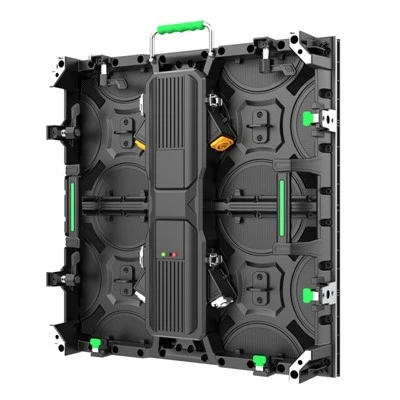

The development of LED displays can be traced back to the 1960s, when LED (light-emitting diode) technology was newly discovered. Initially, it could only be used for simple indicator lights and digital displays, such as the red digital tube displays in calculators and electronic instruments. At this stage, LED applications were limited in function, brightness, and color selection.
With advancements in semiconductor technology, the luminous efficiency and stability of LEDs continuously improved, gradually leading to their application in information display. Monochrome and dual-color LED displays began appearing on billboards and in public information systems, used to display text and simple graphics, marking the development of LED display technology from point-based applications to area-based displays.
From the 1990s onwards, especially in the 21st century, full-color LED display technology matured rapidly. The combination of red, green, and blue primary color LEDs enabled rich color representation. With continuously decreasing pixel pitch and upgraded control technology, small-pitch LED displays gradually became widespread, used extensively in conference rooms, command centers, stage performances, and outdoor advertising. Today, LED displays are continuously developing towards higher definition, intelligence, flexibility, and transparency, becoming an important carrier of modern information display.