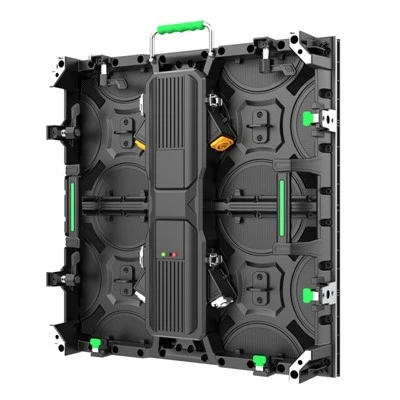

The manufacturing process of LED displays involves multiple stages, from raw material processing to finished product testing, each directly impacting the display's performance and lifespan.
First is module manufacturing. Production begins with PCB design and fabrication. Then, red, green, and blue LEDs, resistors, capacitors, and other components are soldered onto the circuit board using surface mount technology (SMT), followed by reflow soldering for final fixation. Afterward, the modules undergo functional and aging tests to ensure uniform brightness and accurate color for each pixel.
Next is the production of the power supply and control system. Following SMT, through-hole soldering, and general soldering, the PCB board undergoes high-temperature aging and functional testing to verify its stability under different loads and environments. The casing is typically made of aluminum alloy or steel, processed through stamping, die-casting, and spraying to improve heat dissipation and protection.
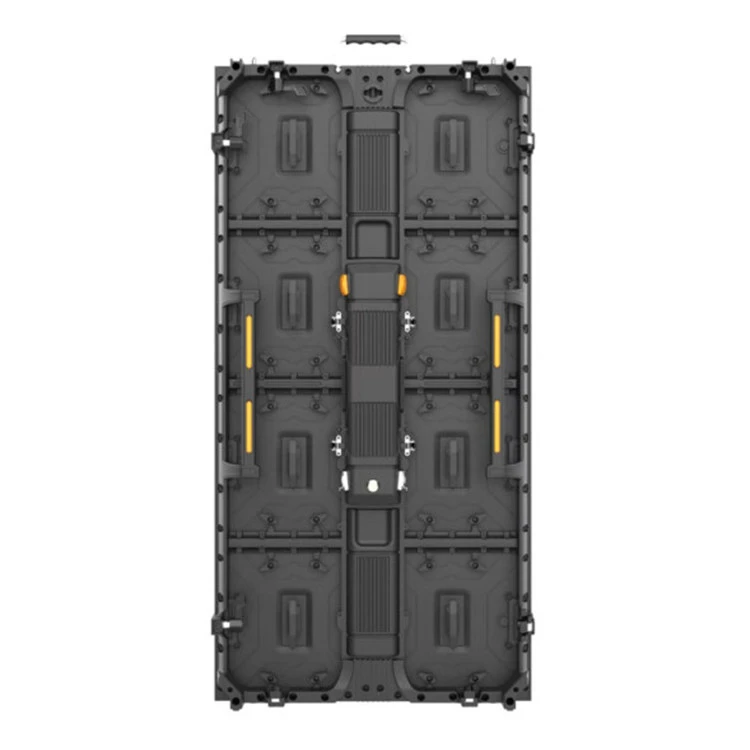
Finally, the cabinet and support structure are manufactured. Aluminum alloy or steel is cut, bent, welded, or die-cast, and then treated with spraying or anodizing to improve corrosion resistance and appearance. Throughout the production process, rigorous testing procedures are required, such as waterproofing tests, vibration tests, and aging tests, to ensure the final product is stable and reliable in practical applications.