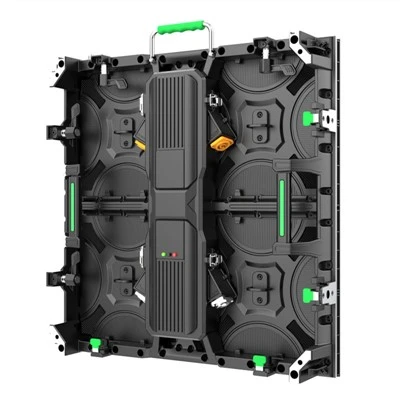

The working principle of an LED display screen is to convert electrical signals into visible images by controlling the on/off state and brightness changes of each LED bead. The display screen is composed of thousands or even more pixels, each typically consisting of red, green, and blue LED beads. By combining different brightness levels, rich color effects can be presented.
During signal processing, the control system first receives video and image signals from computers, players, or other devices, then analyzes and distributes them before transmitting the data to each LED module. The driver chip controls the current based on these signals, causing the corresponding LED beads to light up in a specified manner, thus forming a complete frame of the image. Due to the high refresh rate, the human eye perceives a continuous and smooth video effect.
The driver power supply provides stable power to the entire system, ensuring that each module operates normally under different brightness and working conditions. Through scanning drive methods (such as dynamic scanning), LED displays can achieve high-density pixel display with fewer control lines, improving efficiency and reducing power consumption. It is this precise current control and fast refresh mechanism that enables LED displays to achieve clear, dynamic, and colorful visual presentations.